Buying a used car in Belgium can save you thousands of euros — or cost you dearly if you skip the right steps. Whether you're a first-time buyer or upgrading your family vehicle, going in without a plan is the fastest way to end up with a car that drains your wallet from day one.
This used-car checklist for Belgium walks you through every step, from setting your budget to shaking hands on a fair price — so you buy with confidence, not regret.
Step 1 — Set Your Budget Before You Browse
Before you fall in love with a listing, define your numbers:
- Purchase price — how much you can pay upfront or finance
- Insurance estimate — use Belgian insurer tools to compare rates by model
- Road tax (verkeersbelasting / taxe de circulation) — varies by region (Flanders, Wallonia, and Brussels each have different rates)
- Annual technical inspection (keuring / contrôle technique) — mandatory in Belgium, and older cars may need extra repairs to pass
A car priced attractively can become expensive fast if its tax bracket or insurance group is high. Always calculate the total cost of ownership, not just the sticker price.
Step 2 — Research the Model and Market Price
Once you have a budget, pick two or three models that fit it. Then:
- Check average market prices for that make, year, and mileage in Belgium
- Look at listings across multiple platforms to build a realistic price benchmark
- Note which models have expensive spare parts or high maintenance costs in Belgium
Knowing the fair market value puts you in a much stronger negotiating position.
Step 3 — Essential Documents to Check (Belgian Rules)
This is where many buyers get caught out. Always verify:
- ✅ Certificate of conformity (CoC) — especially important for imported vehicles
- ✅ Belgian registration document (inschrijvingsbewijs / certificat d'immatriculation) — confirm the seller's name matches the ID
- ✅ Valid technical inspection sticker — check the expiry date on the windscreen
- ✅ Carpass report — mandatory in Belgium for used cars; it shows mileage history and prevents odometer fraud
- ✅ Full service history — stamped booklet or digital records from a garage
- ✅ Outstanding debts or liens — verify the car has no outstanding financing attached to it
💡 Belgian tip: A Carpass is legally required for any second-hand car sale in Belgium. If a seller doesn't have one, walk away.
Step 4 — Physical Inspection Checklist
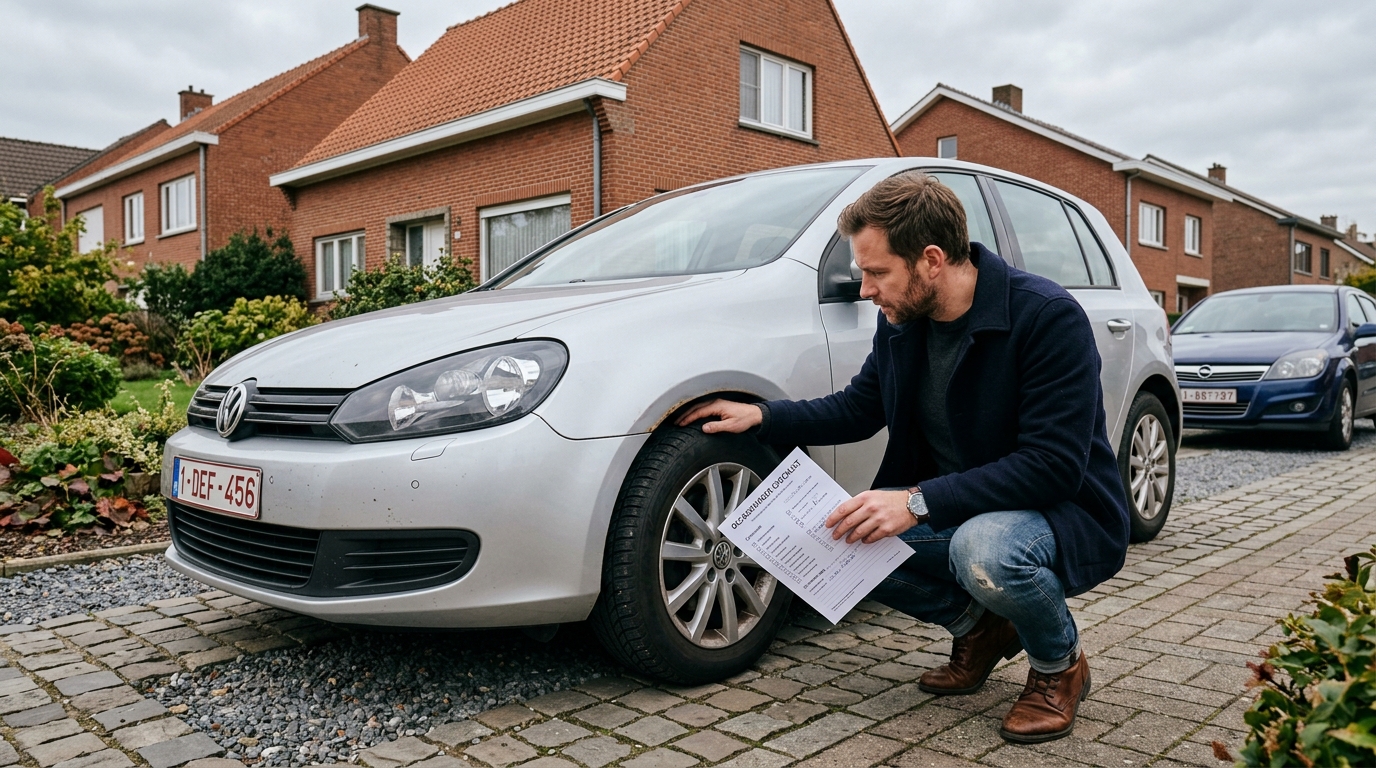
You don't need to be a mechanic to spot red flags. Work through this car inspection checklist systematically:
Exterior
- Check for uneven panel gaps (sign of accident repair)
- Look for rust under the wheel arches, door sills, and undercarriage
- Inspect paint consistency — mismatched shades suggest repainting after damage
- Check all lights, indicators, and mirrors
Interior
- Wear on seats, pedals, and the steering wheel should match the stated mileage
- Test all electronics: windows, air conditioning, infotainment, heated seats
- Look for water stains on carpets or ceiling lining (signs of leaks)
Under the Hood
- Check oil level and color (black sludge is a bad sign)
- Look for coolant leaks or white residue around the cap
- Inspect drive belts for cracking or excessive wear
- Check the battery terminals for corrosion
Tyres
- Tread depth should be at least 1.6 mm (Belgian legal minimum)
- All four tires should match in size and ideally in brand
If you're not confident doing this yourself, hire an independent mechanic or use a certified inspection service — it's often worth the cost.
Step 5 — Test Drive Tips
Never skip the test drive, even for short trips. During the drive:
- Test the car cold (don't let the seller warm it up beforehand)
- Drive on both city roads and at higher speed if possible
- Listen for knocking, rattling, or grinding noises
- Test the brakes — they should feel firm, with no pulling to one side
- Check that the steering wheel sits straight when driving in a straight line
- Verify the gear changes are smooth (for manual and automatic)
If the seller rushes the test drive or discourages it, that's a red flag.
Step 6 — Negotiate Like a Local
Belgian sellers often leave some room for negotiation, especially on private listings. Here's how to approach it:
- Lead with facts: mention the Carpass mileage history, upcoming inspection costs, or tire wear
- Don't open too low — it can kill the conversation before it starts
- Ask for extras — a fresh keuring, a set of winter tires, or a minor repair can be part of the deal
- Be ready to walk away — the best negotiating tool you have
For more practical tips on how to handle marketplace transactions confidently, read our guide on how to sell faster on marketplace platforms in 2026 — it works both ways.
Stay Safe: Avoiding Scams When Buying Used Cars in Belgium
Private used car sales in Belgium are mostly straightforward, but scams do exist. Protect yourself:
- Always meet in person before transferring any money
- Never pay a deposit via bank transfer before seeing the car
- Avoid sellers who claim to be abroad and offer to ship the car
- Use secure payment methods — Belgian bank transfers (with the seller's full identity confirmed) are safer than cash for large amounts
- Verify the seller's identity matches the registration document
For a full breakdown of safe payment practices, check our article on safe payment tips for Belgian buyers and sellers.
Ready to Find a Used Car Near You?
The Belgian used car market is active, competitive, and full of genuinely good deals — when you know what to look for. With this buyer checklist in hand, you can approach every listing with clarity and confidence.
Browse used car listings on DealDone and find local sellers near you — no middleman, no inflated dealer margins, just real people selling real cars across Belgium.
Already have a car to sell? Post your listing on DealDone in minutes and reach buyers in your area today.
FAQ: Buying a Used Car in Belgium
1. Is a Carpass mandatory when buying a used car in Belgium? Yes. Belgian law requires sellers to provide a Carpass for any second-hand car transaction. It shows the complete mileage history of the vehicle and helps protect buyers from odometer fraud.
2. What documents should I check before buying a used car in Belgium? You should check the registration certificate, Carpass report, valid technical inspection sticker, certificate of conformity (for imported cars), full service history, and confirm there are no outstanding loans on the vehicle.
3. How do I know if a used car price is fair in Belgium? Compare the asking price with similar listings by make, model, year, and mileage. Also factor in road tax rates (which vary by region in Belgium), insurance costs, and upcoming maintenance needs.
4. Can I get a used car inspected independently in Belgium? Yes, and it's strongly recommended. You can arrange an independent inspection through a certified garage or an automotive club. This typically costs between €100–€200 but can save you from a much more expensive mistake.
5. What are the biggest red flags when buying a used car in Belgium? Key red flags include: no Carpass, mismatched mileage figures, reluctance to allow a test drive or independent inspection, sellers asking for deposits before viewing, and registration documents that don't match the seller's ID.
6. How do I avoid scams on used car listings in Belgium? Always meet the seller in person, verify their identity against the registration document, never pay before inspecting the car, and use traceable payment methods for large transactions. Listings with suspiciously low prices or sellers claiming to be abroad are common scam patterns.
Conclusion
Buying a used car in Belgium doesn't have to be stressful. With the right used car Belgium checklist, you can avoid the most common pitfalls — dodgy documents, hidden damage, and overpriced listings — and make a purchase you'll feel good about for years.
Take your time, do the checks, and trust your instincts. And when you're ready to start browsing, DealDone is your local Belgian marketplace for finding quality used cars from real sellers near you.
Have questions or tips of your own? Connect with the DealDone community on Facebook, Instagram, and LinkedIn, or contact us directly.