Renovation costs in Belgium are not getting any cheaper. Whether you are restoring an old farmhouse in the Ardennes, updating a terraced house in Ghent, or tackling a full renovation in Brussels, materials can eat up most of your budget before you even lift a hammer.
That is exactly why more Belgian renovators are turning to second-hand building materials — not out of desperation, but out of smart planning. Reclaimed bricks, salvaged roof tiles, used doors and windows, and reclaimed wood can all be found across Belgium, often at a fraction of the new price.
This guide tells you exactly where to look, what to check before you buy, and how to avoid the most common mistakes.
Why Second-Hand Building Materials Make Sense in Belgium
Belgium has a long tradition of solid construction. Older buildings here were built to last, which means the materials stripped from them during demolition are often still in excellent condition. A reclaimed brick from a 1920s Flemish home is typically harder and more durable than a modern equivalent. Antique roof tiles can add character that no new tile can replicate.
Beyond quality, there are clear financial and environmental reasons. Renovation materials second-hand in Belgium can cost 40 to 70 percent less than buying new. And with Belgium's growing focus on sustainable construction, reusing materials also ticks the circular economy box — something that matters for both private buyers and businesses.
What Types of Materials Can You Find Second-Hand?
You might be surprised by the range available on the Belgian second-hand market. Common finds include:
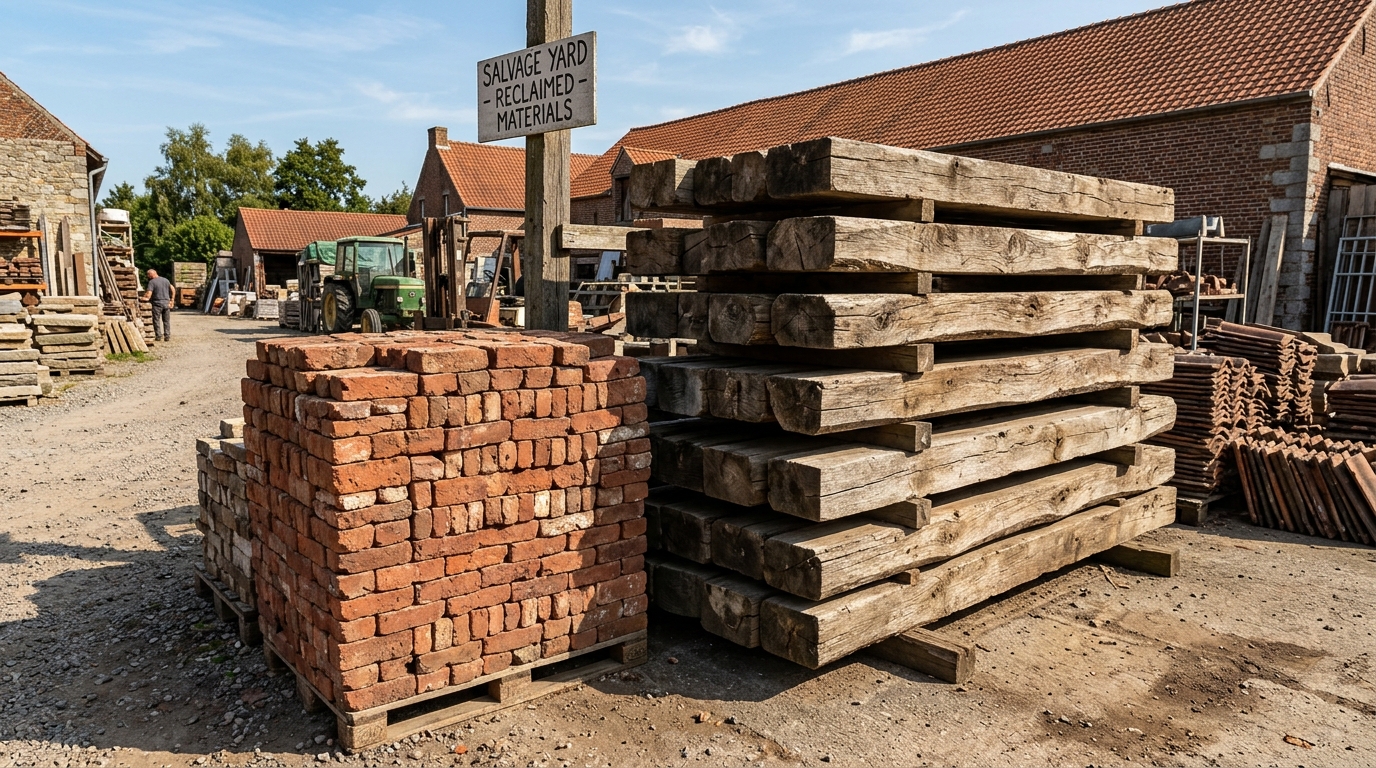
- Used bricks and tiles — terracotta, clay, antique Flemish, and cobblestones
- Reclaimed wood — oak beams, floorboards, railway sleepers, and barn wood
- Doors and windows — wooden panel doors, steel-framed windows, shutters, and skylights
- Roofing materials — antique roof tiles, ridge tiles, and zinc elements
- Flooring — parquet, natural stone slabs, and cement tiles
- Structural elements — steel beams, concrete blocks, and paving stones
- Sanitary and plumbing fixtures — cast iron radiators, old-style bathtubs, copper piping
The key is knowing where to look — and having the patience to search.
Where to Find Second-Hand Building Materials in Belgium
1. Online Marketplaces — Start Here
The fastest and most convenient way to find cheap building supplies in Belgium is online. Local marketplace platforms allow private sellers, contractors, and demolition companies to list materials directly. You can filter by region, pick up locally, and often negotiate the price.
DealDone is a Belgian marketplace where you will regularly find listings for used bricks, reclaimed wood, salvaged windows and doors, old roof tiles, and more. Because it is built for Belgian buyers and sellers, listings are local — which matters when you are dealing with heavy materials that you cannot easily ship. Browsing the platform before visiting any physical salvage yard is a smart first step.
Before you make contact with any seller, it helps to know how to write a message that gets a response and leads to a genuine deal.
2. Salvage Yards and Architectural Reclaim Shops
Belgium has a number of dedicated salvage operations that specialize in reclaimed architectural materials. These physical yards stock items in bulk — ideal if you need large quantities of matching bricks or floor tiles.
Look for businesses near demolition zones in cities like Antwerp, Liège, Ghent, and Charleroi, where older building stock is regularly cleared. Some yards also deal in antique radiators, stone fireplaces, and wrought iron elements — items that are hard to find elsewhere.
3. Demolition Auctions and Estate Clearances
When a large property is demolished or renovated, the materials are sometimes auctioned off before the wrecking crew arrives. These events can yield excellent finds — entire lots of matching tiles, original hardwood floors, or period window frames.
Keep an eye on local municipal announcements and specialized auction platforms. Networking with local contractors and architects can also put you on the list for private clearances before materials go public.
4. Facebook Groups and Local Community Forums
Several Belgian Facebook groups focus on the exchange of used building and renovation materials. These groups tend to be regional (Flanders, Wallonia, Brussels), so posts stay relevant and pickup distances are manageable. Items often go for very low prices or even free when a seller just wants to clear a site.
The challenge with unmoderated groups is that listing quality varies and there is no review system. For more reliable listings with clearer descriptions and photos, a structured platform like DealDone gives you a better foundation. If you are new to buying second-hand, it also helps to read up on how to buy second-hand safely in Belgium before making any payment.
5. Skips, Renovation Sites, and Neighbors
This sounds informal, but it is common practice in Belgium. If you spot a renovation in progress on your street, it is perfectly reasonable to knock on the door and ask whether materials are being discarded. Many contractors are happy to let someone take usable items rather than pay disposal fees.
Always ask permission first. Do not take anything from a skip or site without explicit consent from the owner or contractor.
What to Check Before You Buy Used Building Materials
Not everything second-hand is worth buying. A few things to verify:
- Matching quantities — reclaimed tiles and bricks are often sold in lots; always buy 10 to 15% more than you need, as you will not find an identical batch later
- Structural integrity — check wood for rot, insect damage, and warping; inspect bricks for crumbling mortar faces
- Hazardous materials — older buildings may contain asbestos in insulation, floor tiles, or roofing; never purchase or handle suspected asbestos materials without professional advice
- Dimensions — older doors, windows, and beams were not made to modern standard sizes; measure your opening before buying
- Moisture content — reclaimed wood should be checked for dampness before installation
If you are buying used doors or windows in Belgium, check that the frames are square, hinges are intact, and glazing is not cracked or single-pane in a zone where thermal requirements apply.
Selling Leftover Building Materials? List Them on DealDone
If you have just finished a renovation and have leftover tiles, bricks, insulation panels, or fixtures sitting in your garden, do not let them go to waste. Belgian renovators are actively searching for exactly what you have.
Listing on DealDone takes only a few minutes. Good photos, honest dimensions, and a fair price are all you need. To get the most out of your listing, take a look at how to write listings that actually attract buyers — it makes a real difference in how fast your materials sell.
FAQ: Second-Hand Building Materials in Belgium
Can I find reclaimed wood in Belgium through online listings?
Yes. Platforms like DealDone regularly feature listings for reclaimed oak beams, old floorboards, and wooden structural elements. Search by region to find sellers near you and arrange local pickup.
Are second-hand building materials safe to use in a renovation?
Most reclaimed materials are perfectly safe, but you should always inspect for structural damage, rot, and potential hazardous substances like asbestos. For load-bearing elements, consult a structural engineer before installation.
Where can I buy used bricks and tiles in Belgium?
You can find used bricks and tiles in Belgium through local marketplace listings, salvage yards, demolition auctions, and community groups. DealDone is a good starting point for private seller listings across all Belgian regions.
How much cheaper are second-hand building materials compared to new?
Prices vary widely depending on the material and condition, but reclaimed bricks, tiles, and wood are typically 40 to 70 percent cheaper than buying new from a builders' merchant.
What should I do if a seller misrepresents the condition of materials?
Inspect materials in person before paying when possible. If issues arise after an agreed sale, refer to Belgian consumer protection rules for private sales. For guidance on safer transactions, read about safe payment tips for Belgian buyers and sellers.
Can local businesses and contractors list demolition materials on DealDone?
Yes. DealDone welcomes listings from both private individuals and local businesses. Contractors clearing a site can list surplus materials quickly and reach buyers across Belgium. Learn more about why local businesses should advertise on DealDone.
Conclusion
Finding second-hand building materials in Belgium is very much possible — it just requires knowing where to look and what to watch out for. From online listings and salvage yards to demolition auctions and neighborhood networks, the options are broader than most people realize.
Whether you are a DIY renovator hunting for reclaimed wood, a contractor sourcing used bricks and tiles, or a homeowner looking for cheap building supplies in Belgium, the second-hand market has something to offer at every stage of a project.
Start your search on DealDone — Belgium's local marketplace for buyers and sellers. Browse current listings, or post your own surplus materials and connect with people in your area who need exactly what you have.
You can also follow DealDone on Facebook, Instagram, and LinkedIn for the latest listings and marketplace tips. Have a question? Contact us — we are happy to help.