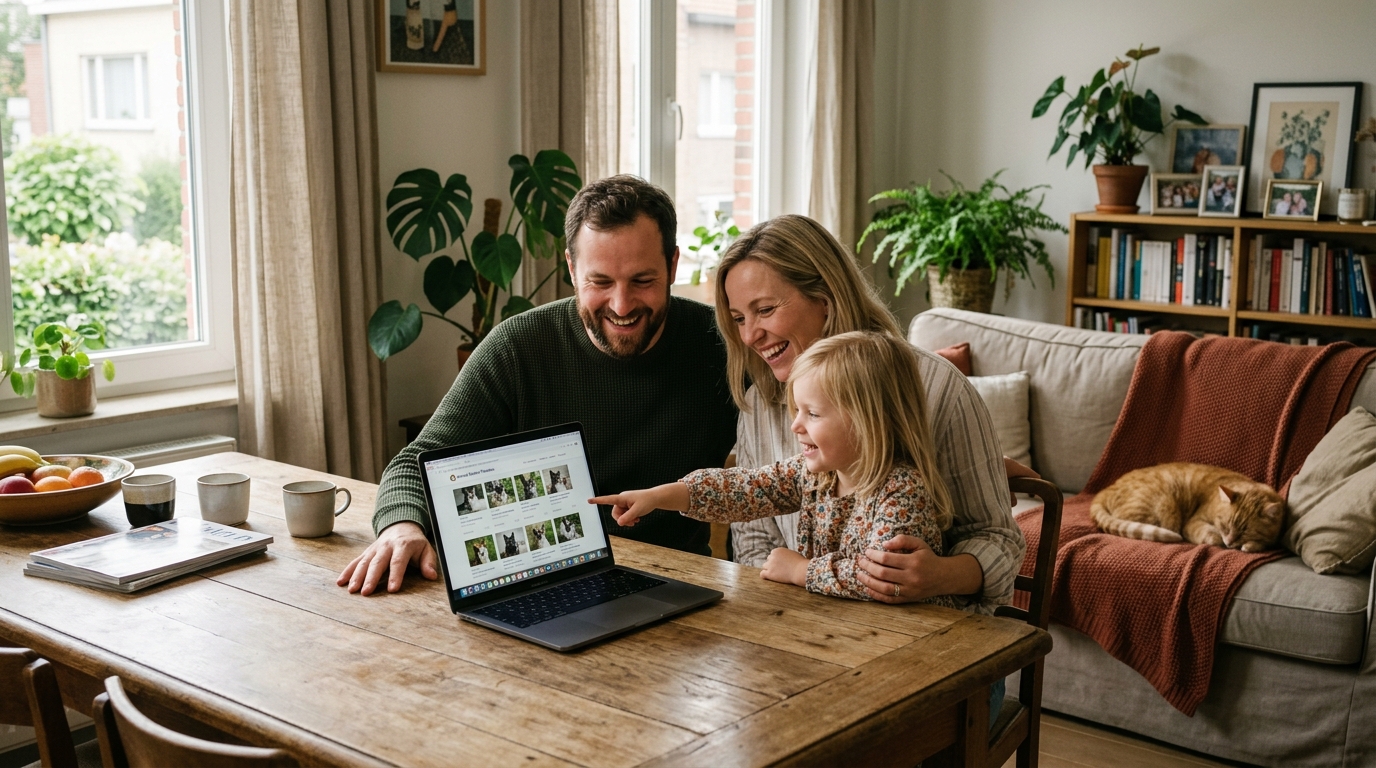
Every year, thousands of Belgian households turn to online marketplaces to find a new animal companion — or to find a caring new home for one they can no longer keep. It makes sense. Local platforms connect people quickly, listings are free or low-cost, and searches stay regional.
But taking on a pet is nothing like buying a second-hand lamp. It's a long-term commitment — emotionally, financially, and legally. And whether you're the one adopting or the one rehoming, what you do before the handover shapes the outcome for everyone involved, including the animal.
Here is everything you need to know before using a pets marketplace in Belgium.
Why Online Listings Have Become a Go-To for Belgian Pet Owners
Belgian families, students, and individuals increasingly use local online classifieds to find dogs, cats, rabbits, guinea pigs, and birds. Shelters often have waiting lists. Breeders can be expensive. And private rehoming through a trusted local platform offers a middle ground that works well — when handled carefully.
The challenge is that the internet doesn't filter intent. Trustworthy owners and irresponsible ones post in the same place. That's why adoption tips and a critical eye matter more than enthusiasm alone.
How to Read a Pet Listing Properly
A genuinely honest listing stands out quickly. Look for these signs of a responsible poster:
- Real, recent photos of the actual animal — multiple angles, no stock imagery
- Clear background information: age, breed, vaccination status, known health issues
- An honest reason for rehoming — stated plainly, not evasively
- Willingness to answer questions before agreeing to any meeting
- Contact details that feel consistent and verifiable
If a listing feels rushed, vague, or unusually cheap for the breed, treat it as a prompt to dig deeper. The same instincts you'd use when spotting fake listings on a marketplace apply directly here — warning signs often look identical.
Adoption Tips: The Questions You Must Ask First
Meeting a pet is exciting. It is easy to fall in love in the first five minutes and skip the important questions. Resist that impulse. Before agreeing to anything, ask:
- Is the animal microchipped, vaccinated, and registered?
- Has it been neutered or spayed?
- Does it have any known health conditions, allergies, or behavioral challenges?
- How does it behave around children, other animals, or unfamiliar people?
- What food, routine, and comfort items is it used to?
- Why is it being rehomed now, and how long has this decision been in the works?
In Belgium, dogs must be microchipped and registered by law. Ask for the documentation at the point of first contact — a responsible rehomer will have it ready and will not hesitate to share it.
Rehoming Guidance: Finding the Right Match, Not Just the First One
If you are the one giving a pet up, the process can feel emotionally draining. But responsible rehoming guidance starts with honesty — in your listing and in your screening.
Write a listing that attracts the right person, not just the fastest responder. Be upfront about the animal's personality, quirks, and needs. A dog with separation anxiety or a cat that needs to be an only pet should not go to just anyone. The advice in our guide on writing listings that attract the right buyers applies equally well here.
Practical rehoming guidance to follow:
- Ask potential adopters questions in return — their living situation, daily schedule, experience with animals
- Avoid handing a pet over to anyone who seems impulsive, evasive, or unprepared
- Consider a short trial period if both parties are open to it
- Never finalize a rehoming without an in-person meeting
- Take the extra time to vet someone properly — it always pays off
Pet Safety: Red Flags Worth Taking Seriously
Not every listing or inquiry is made in good faith. Stay alert to:
- Requests to ship or transport the pet without a face-to-face meeting
- Pressure to decide quickly or pay a deposit before viewing the animal
- Vague, inconsistent, or copy-pasted answers about the pet's background
- Unusually high asking prices with no documentation to support them
- Anyone unwilling to let you visit the animal in their home
Pet safety extends to any money that changes hands. If a symbolic rehoming fee, transport cost, or vaccination reimbursement is involved, always use a traceable payment method. Our guide on safe payment tips for Belgian buyers and sellers covers exactly what to use and what to avoid.
The Handover: Getting It Right
Once both parties are comfortable and ready, plan the handover with care:
- Meet at the pet's current home so you can see how it lives and behaves in its own environment
- Bring a family member or friend if you feel unsure
- Spend at least fifteen to twenty minutes with the animal before finalizing anything
- Collect all paperwork at the handover — vaccination records, microchip registration, vet contact details
- Ask about diet, daily routine, and anything the pet finds comforting
A thoughtful handover protects the animal above all else. And if anything feels wrong at any stage, you are fully entitled to walk away. No transaction — and no animal — is worth compromising your instincts.
Frequently Asked Questions
Can I adopt a pet for free through a Belgian online marketplace? Yes. Many rehoming listings carry no cost at all. Some owners ask for a small symbolic fee to filter out non-serious inquiries. Regardless of price, always request documentation and verify the animal's health history.
Is it legal to rehome or sell pets on online platforms in Belgium? Private rehoming is generally permitted, but Belgian animal welfare law requires that pets — especially dogs — be microchipped, vaccinated, and registered. Licensed breeders face stricter regulations. Always verify the animal's legal status before proceeding.
How do I tell whether a pet listing is genuine? Genuine listings include real photos, detailed descriptions, traceable contact information, and a poster who welcomes your questions. Be cautious of vague listings, pressure to make a quick decision, or anyone who refuses an in-person meeting.
What documents should I receive when adopting a pet in Belgium? At a minimum, the microchip registration document, the vaccination booklet, and breed-specific paperwork if applicable. For dogs, ask for the official registration confirmation. Request vet records where possible.
What can I do if health problems were hidden from me after adoption? If a seller or rehomer knowingly concealed a health issue, this may have legal implications in Belgium. Keep all written communication, have the animal examined by a vet immediately, and seek advice if needed.
How do I write a good rehoming listing for my pet? Be specific, honest, and thorough. Include the animal's age, health status, personality, known quirks, and the genuine reason for rehoming. The more accurate your listing is, the better the matches you will attract.
Conclusion
Using a pets marketplace in Belgium the right way means slowing down, asking the hard questions, and prioritizing the animal's welfare over the convenience of a quick deal. Whether you are hoping to welcome a new companion into your home or find the best possible future for a pet you love, the outcome depends almost entirely on the care you put in before the handover.
DealDone is built for exactly this kind of local, human connection. Browse listings in your area, post your own, and do it with confidence.
Explore listings on DealDone and find your next connection — locally, safely, and on your terms.
Stay connected and follow us on Facebook, Instagram, and LinkedIn for more marketplace tips. Have a question? Contact us — we're happy to help.