Belgium has a rich culture of collecting. From Ghent flea markets to Antwerp estate sales, antiques and vintage objects have always held real value here. But more sellers are now moving online — and for good reason. If you know what you have, price it correctly, and list it in the right place, you can reach serious buyers across the country without leaving your home.
This guide walks you through everything: how to research your item's value, how to write a listing that works, and how to close the deal safely.
Why Selling Antiques Online in Belgium Is Different
Selling a vintage lamp is not the same as selling a second-hand laptop. Antique buyers expect detailed descriptions, clear provenance information, and high-quality photographs. They also tend to ask more questions before committing — which is completely normal in this category.
Belgian collectors are knowledgeable. Many have been buying for decades, whether at the Waterloo Antiques Market, Brussels brocante fairs, or through private networks. When you list online, you are competing with (and selling to) these same people. That means accuracy and authenticity matter more than flashy descriptions.
Before you list anything, take time to understand what you actually have.
Step 1: Identify and Research Your Item
Start by gathering as much information as possible about the piece:
- Origin and approximate age — Is it Belgian-made? Pre-war? Art Nouveau or Art Deco period?
- Maker's marks or signatures — Check the base, back, or underside of ceramics, silverware, furniture, and paintings
- Condition — Note chips, repairs, missing parts, or patina
- Provenance — Where did the item come from? A family estate? A documented collection?
For antique valuation in Belgium, a few routes exist. You can consult a local auction house such as Horta or Campo & Campo, visit a certified antique dealer, or use online databases to compare similar sold items. Free online research is a starting point — not a final price.
If you are dealing with a potentially valuable piece, it is worth getting a formal opinion before listing it. Underpricing is just as much a mistake as overpricing.
Step 2: Price It Realistically
Pricing collectibles is part research, part instinct. A few practical principles:
- Look at what similar items have actually sold for, not just what they are listed for
- Condition affects value significantly — a hairline crack in porcelain can reduce value by 30–50%
- Rarity matters, but only if buyers are actively looking for it
- Leave a little room for negotiation — Belgian buyers almost always ask for a discount
If you need broader guidance on setting prices for second-hand goods, the post on how to price second-hand items in Belgium is a useful reference.
Step 3: Take Photos That Do the Item Justice
For antiques and collectibles, photography is everything. Buyers cannot touch or inspect the piece in person, so your images have to do that work.
Follow these guidelines:
- Shoot in natural daylight — avoid flash, which flattens detail and creates glare
- Use a neutral background (white, grey, or natural linen)
- Capture multiple angles: front, back, sides, bottom, and any maker's marks
- Include a scale reference such as a ruler or common object
- Photograph any damage or repairs clearly and honestly
If you want a full photography workflow for marketplace listings, check the guide on how to take photos for online listings in Belgium.
Step 4: Write a Listing That Attracts Serious Buyers
Antique buyers scan listings quickly. If your description is vague, they move on. Be specific from the first line.
A strong listing for a collectible includes:
- Item name and category (e.g., "Art Deco ceramic vase, Belgium, circa 1930")
- Dimensions — height, width, depth, weight if relevant
- Condition — honest and detailed
- Any known history or provenance
- Maker's mark details, if present
- Why you are selling — optional, but adds trust
Avoid phrases like "rare find" or "museum quality" unless you can back them up. Experienced collectors see through vague hype immediately.
For more listing tips that apply across categories, the article on how to write listings that actually attract buyers covers the fundamentals well.
Step 5: Choose the Right Platform for Belgian Collectors
Not every marketplace is suited to antiques and collectibles. You want a platform where Belgian buyers actively search, where listings stay visible long enough to find the right person, and where you can communicate easily with interested buyers.
DealDone is a Belgian-first marketplace built around local buying and selling. Listing your antique or collectible here puts it in front of buyers already looking in Belgium — not lost in a sea of international listings where your niche item may never surface.
For rare items or pre-war collectibles in Belgium, local visibility often matters more than sheer traffic volume. The right buyer in Bruges or Liège is worth more than a thousand unqualified visitors from abroad.
Step 6: Handle Payment and Handover Safely
Antiques can be high-value items. That makes payment safety important.
Recommendations for sellers:
- For local pickup, accept cash or bank transfer only — avoid payment apps you are not familiar with
- For shipped items, only send once payment has fully cleared
- Meet buyers in a public, neutral location if the item is portable — never invite strangers home for a first meeting
- For high-value pieces, consider meeting at a notary or bank if both parties prefer it
The guide on safe payment tips for Belgian buyers and sellers covers this in more detail, including how to spot payment scams that target second-hand sellers.
Selling Vintage Items: What Moves Fast, What Takes Time
Not all antiques sell at the same speed. In Belgium, the following categories tend to move well online:
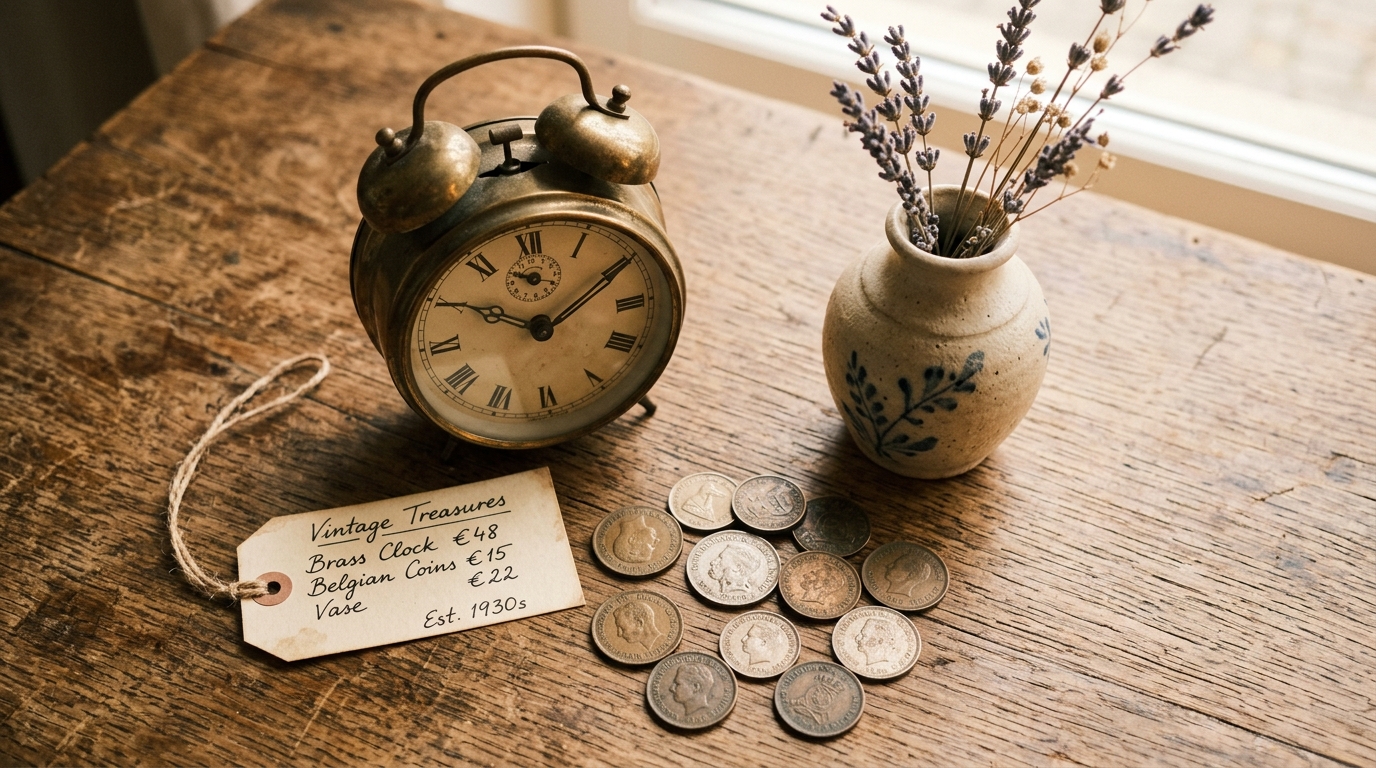
- Art Nouveau and Art Deco decorative objects — Belgium has a particularly strong heritage here
- Old coins, stamps, and medals — compact and easy to ship, with an active collector base
- Vintage posters and advertising prints — popular with younger buyers decorating apartments
- Pre-war ceramics and glassware — sought after by serious collectors
- Vintage watches and jewellery — high demand, but buyers expect proof of authenticity
Furniture and large pieces tend to sell more slowly online because of logistics. For these, local listings with pickup options work best. Read more in how to sell furniture fast in Belgium without underselling yourself.
FAQ: Selling Antiques and Collectibles Online in Belgium
How do I find out what my antique is worth in Belgium?
Start by researching comparable items on auction platforms and price databases. For valuable pieces, consult a Belgian auction house or certified antique dealer for a professional valuation. Online research gives you a starting range — professional opinion gives you confidence before listing.
Where is the best place to sell antiques online in Belgium?
A local Belgian marketplace like DealDone gives you visibility with buyers already searching in Belgium. This is especially useful for bulky items where local pickup is the only practical option.
Do I need to declare income from selling antiques in Belgium?
If you are selling occasional personal items, Belgian tax law generally does not treat this as professional income. However, if you buy and sell regularly for profit, you may be considered a trader. When in doubt, consult a Belgian accountant or the SPF Finances website.
How should I ship fragile collectibles in Belgium?
Use double-walled boxes with plenty of padding material. Mark the package clearly as fragile. For high-value items, use a tracked and insured service. bpost is a popular choice for domestic shipping in Belgium.
What information should I include in an antique listing?
Include the item name, approximate age, origin, dimensions, condition (honest and detailed), maker's marks if present, and clear photographs from multiple angles. The more specific you are, the more trust you build with serious collectors.
Is it safe to sell expensive collectibles to strangers online?
Yes, with the right precautions. Always confirm payment before releasing an item. For high-value pieces, prefer bank transfer over cash or unfamiliar apps. Meet in a public place or arrange a secure handover. Review the safe payment tips for Belgian buyers and sellers for a full checklist.
Conclusion: Start Listing and Find the Right Buyer
Selling antiques and collectibles online in Belgium is genuinely rewarding when you do it right. The key is preparation: know your item, price it fairly, photograph it well, and list it where Belgian buyers are already looking.
Whether you are clearing out a family estate, selling a collection you have built over years, or simply parting with a few vintage finds, there is a buyer in Belgium who wants what you have.
Post your listing on DealDone today and put your antiques in front of the right local audience — no commission, no complications, just straightforward Belgian buying and selling.
Follow DealDone on Facebook, Instagram, and LinkedIn for marketplace updates and selling tips. Questions? Reach us via Contact Us.